
How to Bustle a Wedding Dress | Bustle Styles Explained
How to Bustle Your Wedding Dress: Bustle Styles and What You Need to Know
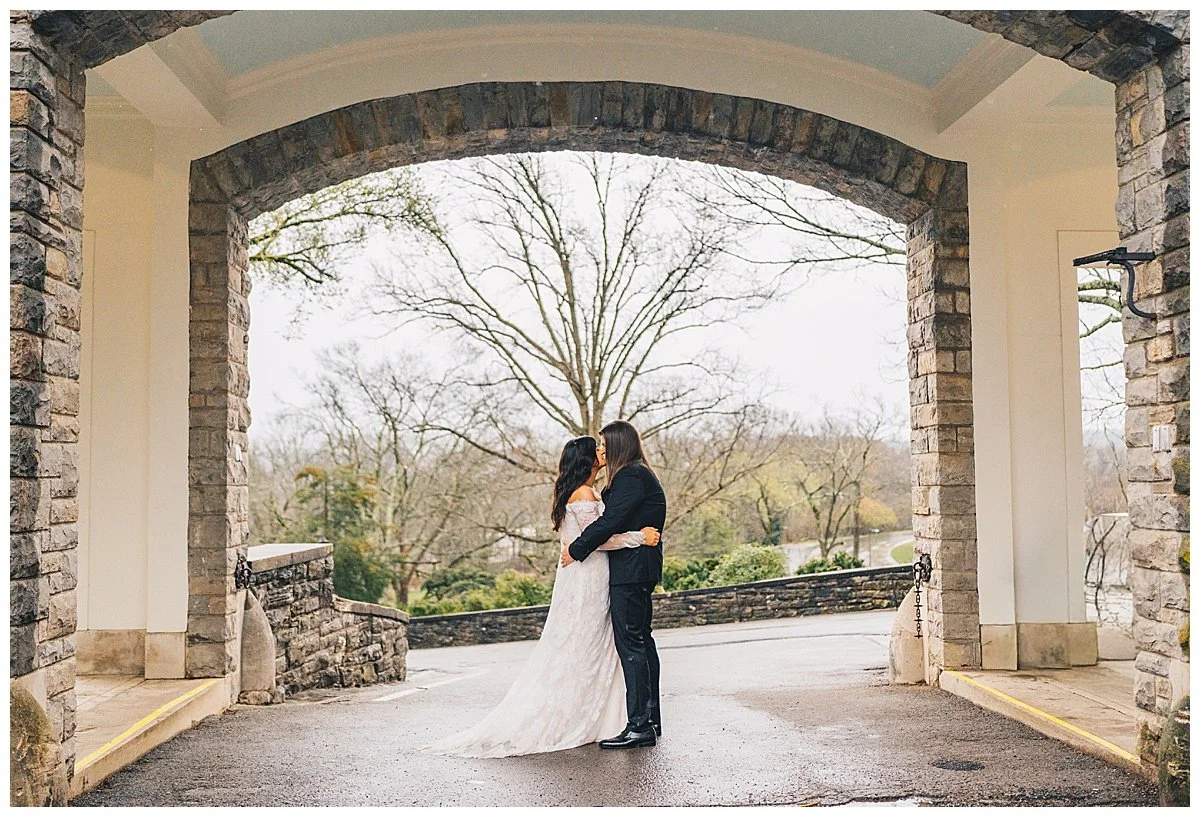
After photographing 400+ weddings in Nashville since 2017, I've watched hundreds of brides bustle their dresses—and I've seen the confusion when no one knows how the bustle works!
Here's what usually happens: Ceremony ends, bride needs to bustle dress before reception, and suddenly everyone's staring at the back of the dress trying to figure out which hook goes where.
A bustle transforms your dress from ceremony-ready (with beautiful train flowing behind you) to reception-ready (train tucked up so you can walk, dance, and move without tripping).
I'm going to explain exactly what a bustle is, the different types, when and how to bustle your dress, and what you need to know so this transition goes smoothly on your wedding day.
What Is a Wedding Dress Bustle?
The Purpose:
A bustle is a series of hooks, buttons, or ties sewn into your wedding dress that allow you to lift and secure the train for the reception portion of your wedding.
Why you need it:
Ceremony: Train flows behind you for dramatic aisle walk and photos
Reception: Train tucked up so you can:
Walk without tripping
Dance without stepping on dress
Use bathroom
Move around freely
When It's Added:
Your seamstress adds the bustle during alterations, typically 2-4 weeks before your wedding.
What they do:
Sew ribbons, hooks, buttons, or snaps into specific points
Create mechanism to lift train
Show you how it works at final fitting
Types of Bustles
1. American Bustle (Over Bustle)
What It Looks Like:
Train folds UP and OVER, attaching to the outside of dress. Creates gathered, layered look.
How It Works:
Hooks or buttons on underside of train attach to corresponding loops or buttonholes at waist level on outside of dress.
Best For:
Ball gown skirts
Dresses with volume
Dramatic layered look
Simple, sturdy bustles
Pros:
Easy to bustle
Reliable
Very common
Looks intentional
Cons:
Can look bulky on some dresses
Changes silhouette significantly
2. French Bustle (Under Bustle)
What It Looks Like:
Train is tucked UNDER dress, creating cascading effect. Maintains elegant drape.
How It Works:
Ribbons or cords underneath train tie to loops sewn under layers of skirt, creating bustle points that pull train up.
Best For:
A-line dresses
Fitted dresses
Dresses where you want to maintain silhouette
More formal look
Pros:
Elegant, refined look
Maintains dress shape
Very pretty
Cons:
More complex to bustle
Can come undone more easily
Harder to do yourself
3. Ballroom Bustle
What It Looks Like:
Train is gathered at multiple points evenly around hem, creating uniform gathered look all around dress.
How It Works:
Multiple tie points (usually 5-10) around entire hem of train all connect to waist area, pulling train up evenly.
Best For:
Long cathedral trains
Very full ball gowns
Even, symmetrical look
Pros:
Works for very long trains
Distributes weight evenly
Cons:
Most complex bustle
Takes longest to do
Requires multiple people helping
4. Bow/Austrian Bustle
What It Looks Like:
Train is gathered with ribbons into decorative bows or rosettes on back of dress.
How It Works:
Ribbons threaded through dress create gathered, ruched look when tied.
Best For:
Romantic, decorative look
Dresses where bustle becomes design feature
Less formal weddings
Pros:
Beautiful, decorative
Adds design element
Cons:
Complex
Can be time-consuming
Not as secure
5. Train Wristlet/Hook
What It Is:
Simple loop or hook you slip over your wrist to hold train up while walking/dancing.
How It Works:
Loop attaches to end of train, you slip it over wrist when needed.
Best For:
Short trains
Casual approach
Temporary solution
Pros:
Super simple
Can let train down easily
Cons:
Train still drags when not on wrist
Not hands-free
Doesn't work for dancing
When to Bustle Your Dress
Standard Timing:
AFTER ceremony, BEFORE reception
Typical timeline:
5:00pm - Ceremony ends
5:00-5:10pm - Recessional, greet guests, exit to cocktail hour space
5:10-5:15pm - BUSTLE DRESS
5:15-5:45pm - Couple portraits
5:45pm - Join cocktail hour or head to reception
Why this timing:
You want train for ceremony (photos, aisle walk), but need it bustled for everything else.
Alternative Timing:
Some brides bustle:
Before couple portraits (if not doing first look)
Right before reception entrance
Before first dance
Photographer's take:
I prefer you bustle AFTER ceremony but BEFORE couple portraits. Here's why:
Pros of bustling before portraits:
You can move freely for photos
Don't have to worry about train getting dirty
Can walk naturally
Cons:
Some ceremony-style portraits with train are gone
Many photographers take some portraits WITH train, then you bustle, then we continue portraits.
Timeline advice: Wedding day timeline hour-by-hour
Who Bustles Your Dress?
Most Common:
Your maid of honor
She's your right-hand person, and bustling is typically her job.
Also Can Bustle:
Mom or mother-in-law
Bridesmaids (if MOH needs help)
Wedding coordinator
Multiple people working together
How Many People Needed:
Simple American bustle: 1 person (MOH) can do it
French or complex bustle: 2-3 people helpful
Ballroom bustle: Might need 2-4 people
Your seamstress will tell you at fitting how many people are needed.
How to Prepare for Bustling
At Your Final Fitting (2-4 Weeks Before Wedding):
☐ Seamstress shows you how bustle works
☐ Take photos/video of bustle process
☐ Practice doing bustle (or have MOH there to learn)
☐ Count how many bustle points (so you know if any are missed day-of)
☐ Ask questions!
Questions to Ask Seamstress:
"How many bustle points are there?"
"Which hooks go to which loops?" (have them mark or show you)
"Does order matter?"
"Can one person do this or do I need help?"
"How do I tell if it's done correctly?"
"What if a hook breaks?" (some seamstresses provide backup)
CRITICAL: Take Photos at Fitting
Have someone take photos of:
Which hooks go where
Numbered sequence if relevant
What finished bustle looks like
Close-ups of attachment points
Why this matters:
On wedding day, no one remembers how bustle works. Photos are lifesaver.
Bring MOH to Final Fitting (If Possible)
Best practice: Bring maid of honor to final fitting so she can learn bustle.
If she can't make it:
Take detailed photos/video
Show her photos before wedding
Have seamstress write instructions
Day-Of Bustling Tips
Before Ceremony:
☐ Review bustle photos with MOH
☐ Make sure you know where hooks/buttons are
☐ Confirm who's helping bustle
☐ Tell photographer you'll need 5-10 min after ceremony to bustle
After Ceremony:
☐ Go to private space (bridal suite, bathroom, etc.)
☐ MOH bustles dress following instructions/photos
☐ Check that all points are secured
☐ Walk around to test—does it feel secure?
☐ Proceed with photos/reception
Pro Tips:
Test walk after bustling: Take a few steps to make sure everything feels secure before going to photos.
Bring safety pins as backup: If hook breaks, safety pins save the day.
Don't rush: Better to take 10 minutes and do it right than rush and have it fall during reception.
Have photos ready: Pull up bustle photos from fitting on someone's phone.
What If Bustle Comes Undone?
During Reception:
It happens! Dancing, moving around, bathroom trips—bustles can come loose.
Solution:
Have MOH or bridesmaid re-bustle between dances or during dinner.
Safety pins: Keep some nearby for emergency fixes.
Wedding coordinator: Often carries emergency sewing kit.
Worst case: Tuck train into waistband temporarily or just hold it.
What to Tell Your Photographer
Before Wedding Day:
☐ "I'll need to bustle after ceremony. Can you capture that process?" (Some photographers take photos of bustling—it's actually sweet moment!)
☐ "I'd like some portraits with train before bustling if possible."
☐ "Bustling will take about 10 minutes—build that into timeline."
Why This Matters:
Photographers need to know:
When you're bustling (we might take break or shoot details)
If you want photos with train before bustling
How much time it will take (affects timeline)
We've seen bustling disasters where no one knows how to do it and 30 minutes gets wasted. Communication prevents this.
Bustling Horror Stories (And How to Avoid Them)
Horror Story #1: No One Knows How
What happened: Seamstress showed bride bustle at fitting, but no one took photos. Day-of, no one remembers.
Result: 30 minutes of confusion, Googling "how to bustle dress," bridesmaids guessing.
Prevention: TAKE PHOTOS AT FITTING
Horror Story #2: Hook Breaks
What happened: Hook breaks off while bustling. No backup plan.
Result: Dress can't be bustled, bride holds train all night or tucks it in waistband.
Prevention: Safety pins as backup. Some seamstresses provide extra hooks.
Horror Story #3: Bustle Falls During First Dance
What happened: Bustle not secured properly, comes undone mid-first dance.
Result: Bride trips on train, embarrassing moment.
Prevention: Test bustle by walking around BEFORE going to reception. Make sure it's SECURE.
Alternatives to Traditional Bustle
Option 1: Detachable Train
Some dresses have REMOVABLE train that unbuttons or unzips.
Pros:
Easy—just remove it
No bustling needed
Train can be preserved separately
Cons:
Not available on all dress styles
Changes dress silhouette completely
Option 2: Two Dresses
Ceremony dress with train, change into reception dress without train.
Pros:
Two dress moments
No bustling
Can have two different styles
Cons:
Expensive
Takes time to change
Another outfit to coordinate
Option 3: No Bustle (Carry/Hold Train)
Just... deal with train all night.
Pros:
No bustle needed
Keep dress as-is
Cons:
Can't dance freely
Will trip
Gets dirty
Uncomfortable
Not recommended for long trains.
Bustle Cost
Bustles are added during alterations.
Cost to add bustle: Usually $50-$150 depending on complexity
Included in alterations package: Some seamstresses include basic bustle in alterations cost
More complex bustle (French, ballroom): Can be $100-$200+
Ask your seamstress what bustle will cost when discussing alterations.
Final Thoughts: Practice Makes Perfect
After photographing 400 weddings:
Bustles that go smoothly = someone practiced or took photos at fitting
Bustles that are disasters = no one knew how to do it
This is so easily preventable:
Take photos/video at fitting
Have MOH there or show her photos
Bring safety pins as backup
Allow 10 minutes in timeline
Test walk after bustling
Don't wing it on wedding day.
Your seamstress spent time creating the perfect bustle. Use it correctly!
Quick Bustle Checklist
At Final Fitting:
☐ Watch how bustle works
☐ Take photos/video of process
☐ Count bustle points
☐ Ask questions
☐ Bring MOH if possible
Before Wedding:
☐ Show MOH bustle photos
☐ Confirm who's helping bustle
☐ Pack safety pins
☐ Tell photographer about bustle timing
Wedding Day:
☐ Review photos with MOH
☐ Bustle after ceremony
☐ Test walk
☐ Proceed with confidence!
More Wedding Dress Resources:
What to do with wedding dress after (preservation)
About Heck Designs and Photography
We're Nashville wedding photographers who have documented 400+ weddings since 2017. We've photographed every type of bustle imaginable and know how to photograph your dress beautifully both before and after bustling.
If you're planning a Nashville wedding and want a photographer who understands dress logistics, builds bustle time into your timeline, and captures your dress gorgeously, let's talk about your day.
We'll make sure your dress looks beautiful in every photo—train or bustled.